

Most people wash their sheets regularly — but pillows, comforters, and mattress protectors are a different story. Studies show that the average pillow can contain more bacteria than a toilet seat after just two years of use without proper washing.
If you live in South Gate or the surrounding LA area, where heat and humidity create conditions for dust mites and allergens to thrive, keeping your bedding clean isn’t just about hygiene — it directly affects your sleep quality and health.
Here’s how to do it correctly, from our laundry cleaning team at Cleaning Pro 1.
How Often Should You Wash Bedding?
| Bedding Item | Recommended Wash Frequency |
| Bed sheets | Every 1–2 weeks |
| Pillowcases | Weekly (more if you sweat a lot) |
| Pillow inserts | Every 3–6 months |
| Duvet / Comforter | Every 2–3 months |
| Mattress protector | Every 1–2 months |
| Blankets (light) | Monthly |
| Heavy quilts / throws | Every 2–3 months |
How to Wash Sheets Correctly
- Use warm or hot water — sheets can tolerate higher temps than clothing, and heat kills dust mites.
- Use a gentle or normal cycle. Avoid heavily agitated cycles for high-thread-count cotton — they cause pilling.
- Wash sheets separately from clothes and towels. Zippers and hooks can snag delicate fabric.
- Don’t overload — sheets need room to move to rinse properly. One set of sheets per load.
- Dry on medium heat and remove promptly to avoid wrinkles and musty odors.
How to Wash Pillows
Most synthetic and down-alternative pillows are machine washable. Memory foam pillows are NOT — water destroys the foam structure.
- Wash two pillows at a time to balance the machine drum.
- Use a small amount of liquid detergent — powder can leave residue inside the pillow fill.
- Run an extra rinse cycle to make sure all soap is out.
- Dry on low heat with two or three dryer balls. This prevents clumping and helps the fill regain its shape.
- Stop the dryer periodically and break apart any clumped fill by hand. The pillow may need 2–3 drying cycles to dry completely through.
If the pillow is not completely dry before you use it, it will develop mildew inside — even if it feels dry on the outside.
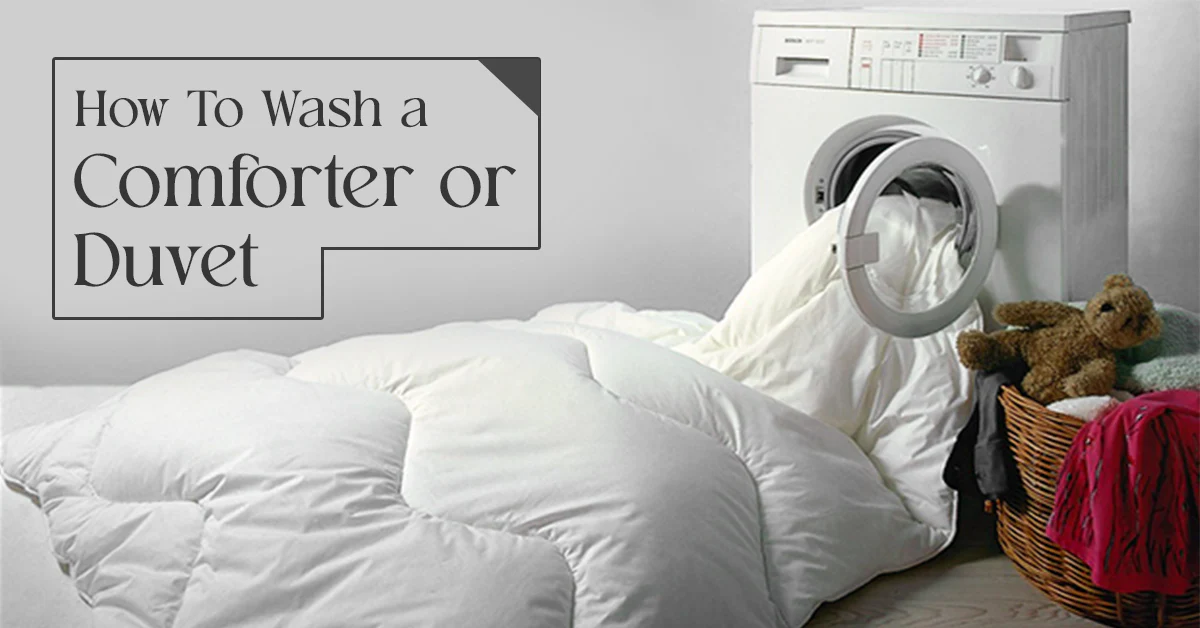
How to Wash a Comforter or Duvet
Comforters are the most commonly neglected bedding item — and the most difficult to wash at home because of their size.
- Check the care label. Down-filled comforters often say “dry clean preferred” — though many can be machine washed carefully.
- Use a commercial-size washer if you have one. Home washers often can’t handle thick comforters properly, and stuffing them in causes uneven cleaning and can damage the fill distribution.
- Wash on gentle cycle in cold water with a small amount of mild detergent.
- Dry on low heat. This takes longer — often 2–3 hours for a thick comforter. Add dryer balls to promote even drying.
- Check the interior is fully dry before storing or use. A damp comforter stored in a closet will grow mold.
When to Use a Professional Laundry Service
Not everything belongs in your home washer. Oversized king comforters, down-filled duvets, weighted blankets, and delicate quilts are all items where professional cleaning is worth it — both to get them properly clean and to extend their life.
handles large bedding items that home washers can’t fit or properly clean. We’re also experienced with delicate fabrics and heirloom quilts that need special handling.
Call us at 562-215-7075 or visit our team at 10309 Atlantic Ave, South Gate, CA 90280. We also offer — keeping your full home fresh and hygienic.