

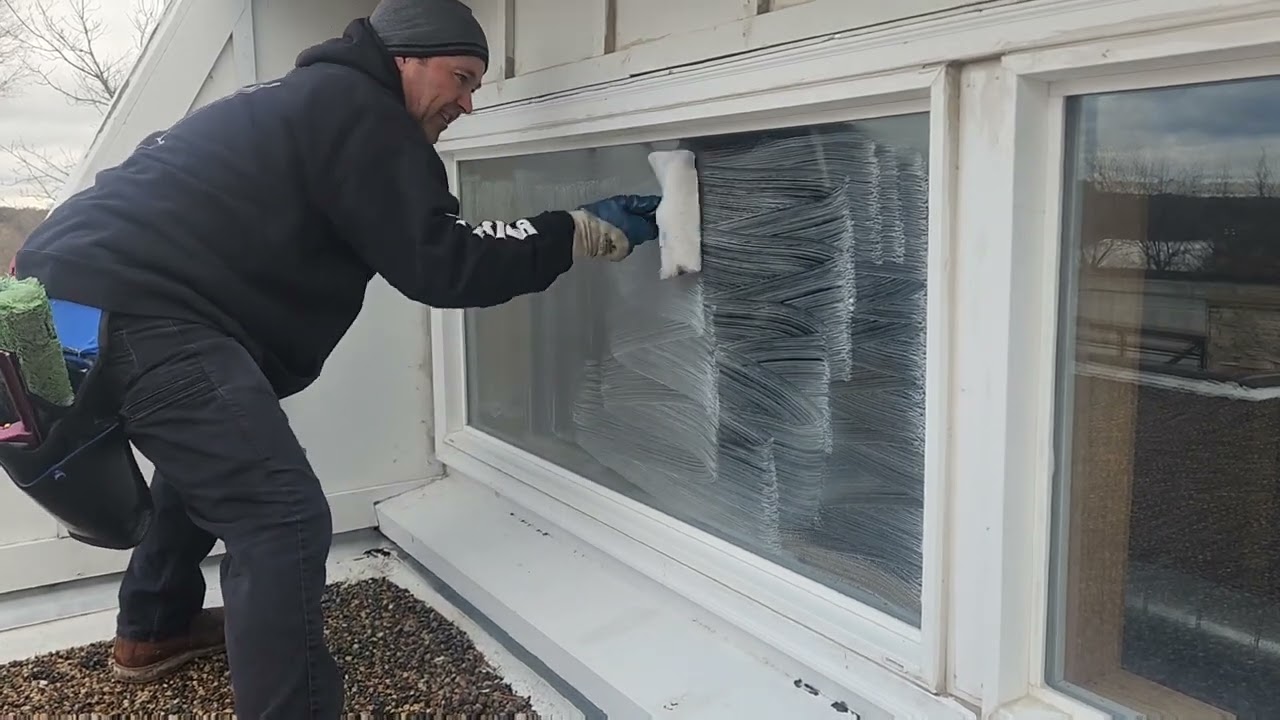
You’ve seen them. Those white, chalky spots on your windows that won’t budge no matter how much you scrub. Or that foggy haze across the glass that makes your windows look perpetually dirty even right after you’ve cleaned them.
That’s hard water staining. And if you live in South Gate or anywhere in Los Angeles County, your windows are more vulnerable to it than almost anywhere else in the country.
This guide explains what hard water staining actually is, why it happens so much in Southern California, what works to remove it, what doesn’t, and how to stop it from coming back.
What Is Hard Water, and Why Is It a Problem for Windows?
Hard water is simply water with a high concentration of dissolved minerals — primarily calcium and magnesium. Los Angeles County has some of the hardest tap water in California, and the municipal water used in irrigation systems throughout South Gate carries significant mineral content.
When hard water lands on glass and evaporates, the water leaves. The minerals don’t. They stay behind as a white, crystalline residue on the glass surface. The first time it happens, you might barely notice. But after weeks or months of repeated exposure — from sprinklers, rain, condensation, or outdoor washing — the deposits layer on top of each other and become increasingly visible and increasingly difficult to remove.
In Southern California, hard water staining isn’t an occasional problem. It’s an ongoing reality. The question is whether you’re managing it early or letting it become permanent.
Where Does the Hard Water Come From?
For South Gate homeowners, the most common sources of hard water contact with windows are:
- Irrigation and sprinkler systems — the most frequent cause. If any sprinkler heads spray water that reaches your windows, you’re getting mineral deposits every time the system runs.
- Rain — LA rain picks up mineral particles from roofing materials and gutters before hitting windows, leaving deposits when it dries.
- Morning condensation — repeated cycles of condensation forming and evaporating create slow but steady mineral buildup, especially on north-facing windows.
- Pressure washing nearby surfaces — mineral-laden water overspray from driveways, patios, or adjacent walls frequently contacts windows.
- Pool or spa proximity — splash from pool water, which contains both minerals and chemicals, creates a specific type of glass staining.
The Three Stages of Hard Water Damage — Know Where Your Windows Are
Stage 1: Surface Deposits (Fully Reversible)
Early-stage mineral deposits sit on top of the glass. They look chalky or hazy and won’t respond to standard glass cleaner — but they haven’t bonded to the glass itself yet. Professional-grade mineral treatment dissolves and removes these deposits completely, restoring full glass clarity. This is the best time to treat hard water staining.
Stage 2: Light Etching (Usually Treatable)
When surface deposits are not removed over a period of months, minerals begin to chemically interact with the silica in the glass surface. Stage 2 staining feels slightly rough to the touch and appears as a semi-permanent haze that doesn’t fully clear with cleaning. Professional glass polishing compounds and technique can significantly improve clarity at this stage, though complete restoration depends on the depth of the interaction.
Stage 3: Deep Etching (May Require Replacement)
Years of untreated mineral buildup that has penetrated deep into the glass surface typically cannot be reversed through cleaning or polishing. At Stage 3, glass replacement may be the only way to fully restore clarity. This is the outcome that early treatment is designed to prevent — and why catching deposits at Stage 1 is so much more valuable than waiting.
Why DIY Products Usually Don’t Work on Hard Water Stains
Most homeowners try white vinegar first — and for very light, fresh surface deposits, a vinegar solution can have some effect. But for anything beyond the earliest stage of staining, vinegar simply isn’t acidic enough to dissolve established mineral deposits on glass.
The retail ‘hard water stain removers’ found in hardware stores are inconsistent. Some work adequately on mild buildup. Many don’t. And some abrasive products marketed for this purpose can scratch glass if applied incorrectly — creating a new problem while failing to solve the original one.
The core issue: consumer products are formulated to be safe for general household use, which means they’re limited in how aggressive they can be. Professional-grade mineral treatment solutions used by Pro Cleaning 1 are specifically formulated to dissolve calcium and magnesium deposits on glass — without scratching, without damaging specialty coatings, and without affecting window seals or frames.
What Professional Hard Water Treatment Actually Involves
When Pro Cleaning 1 treats windows for hard water staining, the process is more involved than a standard clean:
- Visual assessment first — we identify whether deposits are Stage 1, 2, or 3 before starting, and give you an honest read on what full removal is realistic.
- Professional-grade mineral treatment solution applied to affected glass
- Controlled dwell time — the solution is allowed to work on the deposits before removal
- Non-abrasive agitation technique to lift dissolved deposits from the surface
- Thorough rinse and streak-free finish
- Recommendations for prevention going forward — sprinkler adjustment, cleaning frequency, etc.
The products we use are safe for all standard glass types including tinted windows, double-pane energy glass, and low-E coated windows.
How to Prevent Hard Water Stains From Coming Back
After treatment, prevention comes down to two things: reducing mineral water contact with glass, and maintaining a regular cleaning schedule so deposits never have time to progress.
Reduce Sprinkler Contact
Walk your property and identify any sprinkler heads that spray toward windows. Adjusting the angle or direction of irrigation heads is one of the most effective preventive measures available — it addresses the problem at the source rather than managing the outcome.
Maintain a Regular Cleaning Schedule
For South Gate homes with active irrigation near windows, exterior cleaning every 6–8 weeks during active irrigation seasons prevents deposits from progressing beyond Stage 1. Homes with minimal sprinkler exposure near glass can typically manage with quarterly exterior cleaning.
Dry Windows After Spray Exposure
If you notice sprinklers have caught your windows, a quick wipe with a clean microfiber cloth before the water dries prevents deposits from forming in the first place. It takes 30 seconds and eliminates the problem entirely.
Worried About Your Windows? Start With a Free Assessment
Pro Cleaning 1 is based in South Gate at 10309 Atlantic Ave. If you’re seeing white spots, haze, or film on your windows that won’t respond to regular cleaning, we’ll assess the condition of your glass honestly and tell you exactly what’s needed — no upselling, no guesswork. We also offer full residential window cleaning in South Gate including indoor and outdoor glass, frames, screens, and tracks.
Call 562-215-7075 or get a free quote online. Same-day appointments available most weekdays.