

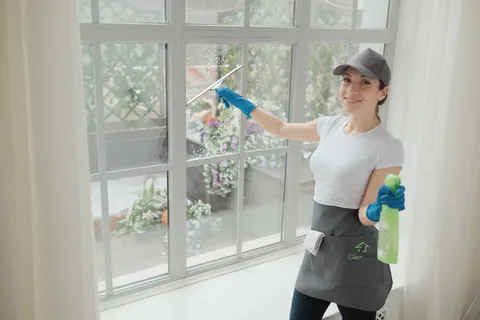
You’ve cleaned your windows. You stepped back to admire the result. And there they are: streaks, smears, and that maddening haze that makes the glass look worse in direct light than it did before you started.
Streaks are one of the most common complaints homeowners have about window cleaning, and they’re almost always caused by the same handful of mistakes. The good news is that once you understand why they happen, they’re completely preventable.
Here’s an honest breakdown of what causes streaks, what actually works, and where professional cleaning makes a difference that’s hard to replicate on your own.
Why Streaks Happen in the First Place
Streaks are almost never about the glass itself. They’re about what’s left behind on it after cleaning. The main causes:
- Wrong cleaning solution. Most household glass cleaners contain soap, ammonia, or surfactants that leave a thin residue when they dry. That residue catches light and appears as streaks. Products with fragrances, moisturizers, or added shine agents are especially prone to this.
- Dirty or low-quality cloths. Paper towels leave lint. Old rags leave fibers. Even microfiber cloths that haven’t been properly laundered can deposit residue on glass. Clean tools are not optional.
- Cleaning in direct sunlight. When the sun hits glass, cleaning solution evaporates too fast to be wiped away cleanly. What dries on the surface becomes a streak. This is one of the most common mistakes homeowners make, especially in Southern California where sun is rarely absent.
- Too much solution. More product doesn’t mean cleaner glass. Excess solution is harder to wipe away completely, increasing the chance of streaking as it dries.
- Existing mineral buildup. If your windows have hard water deposits from sprinklers or rain, standard glass cleaner won’t remove them. Instead, it smears the mineral film across the surface. What looks like a streak is actually a partially dissolved mineral deposit that dried in place.
What Actually Works: The Sequence That Prevents Streaks
Step 1: Choose the Right Time of Day
Clean windows early morning or in the evening when glass is cool and out of direct sun. In South Gate, midday cleaning from spring through fall almost guarantees streaking because the glass surface heats up and solution evaporates before you can wipe it.
Step 2: Rinse or Wipe First
Before any cleaning solution touches the glass, remove loose dust, pollen, and debris with a dry microfiber cloth or a light rinse with water. Applying solution over a layer of grit drags particles across the glass and creates scratches, not streaks, but the cleaning result suffers either way.
Step 3: Use a Diluted Solution, Not a Spray
A small amount of dish soap in a bucket of water works better than most commercial sprays for exterior windows. For interior glass, distilled water alone, or water with a small amount of white vinegar, is often sufficient for light buildup. Apply with a soft sponge or professional scrubber.
Step 4: Use a Squeegee, Not a Cloth
A rubber squeegee is the single biggest upgrade you can make to your window cleaning process. It removes solution in one clean pass without leaving lint or residue. Technique matters: start at the top corner, pull in an overlapping S-pattern or single horizontal passes, and wipe the blade clean after every stroke with a lint-free cloth.
Step 5: Detail the Edges
After squeegeeing, run a dry microfiber cloth along the edges and sill where solution accumulates. This prevents runs from working back onto the clean glass.
Interior Windows: Different Rules
Interior glass has different challenges. Indoor windows collect condensation residue, fingerprints, cooking vapors, and dust film, but they’re not exposed to hard water or sprinkler overspray. Use a clean, lightly damp microfiber cloth with no soap for most interior glass. Dry immediately with a second clean cloth before any residue can settle.
For bathroom mirrors and kitchen windows near cooking surfaces, a small amount of rubbing alcohol diluted in water cuts grease film effectively and evaporates cleanly.
When DIY Doesn’t Solve the Problem
If you’re doing everything right and still getting haze or cloudiness that won’t clear, the issue is likely mineral buildup underneath the surface of the glass, not streaks from the cleaning process. Hard water deposits from South Gate’s irrigation systems and LA County tap water etch into glass over time, and standard cleaning solution won’t dissolve them. They need a professional-grade mineral treatment that’s specifically formulated to break down calcium and magnesium deposits without scratching the glass.
Once treated, regular cleaning becomes straightforward again, and the streak-free results you’re trying to achieve become easy to maintain.
Get Streak-Free Windows Without the Effort
Pro Cleaning 1 serves South Gate and surrounding communities with residential and commercial window cleaning that leaves glass genuinely clear, not just visually cleaner than before. If your windows have persistent haze or buildup that home cleaning hasn’t resolved, call us at 562-215-7075 or visit https://procleaning1.com/contact/ to request a free quote. Same-day appointments available most weekdays.