

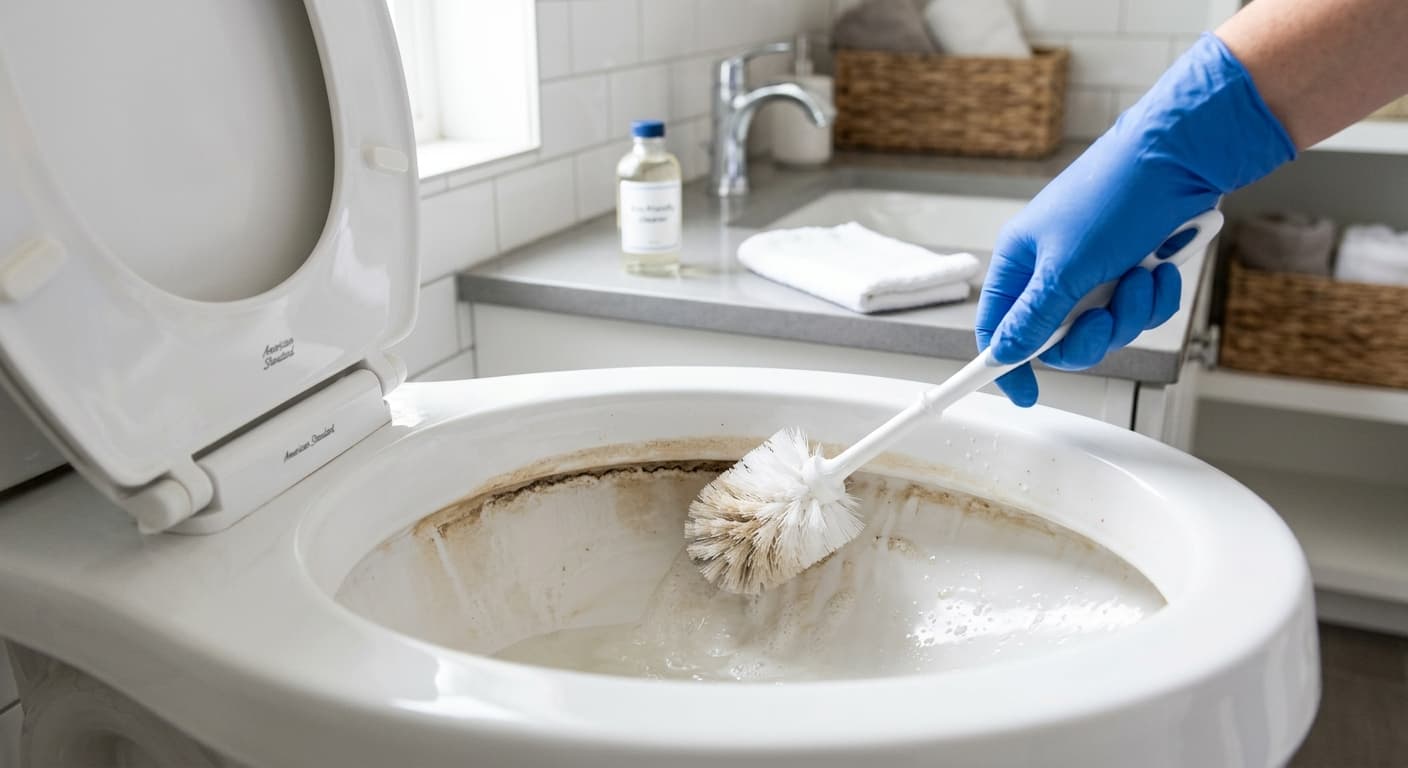
You scrub the toilet, flush, and the ring is still there. Stubborn stains and rings are one of the most common bathroom complaints, and they usually come from the water itself rather than from poor cleaning. The good news is that most of them can be removed with the right method.
This guide explains what causes toilet bowl stains, how to remove each type safely, and when it is worth calling for help. At Pro Cleaning1, we clean bathrooms and toilets in South Gate and nearby communities, so these are the problems we deal with every week.
What Causes Toilet Bowl Stains and Rings?
Different stains have different causes, and the cause decides the fix:
- Hard water rings. Minerals such as calcium and magnesium in the water build up at the waterline and leave a chalky white, gray, or tan ring.
- Rust stains. Iron in the water or in old pipes leaves orange or brown streaks.
- Mineral buildup under the rim. Water that flows from the rim jets can leave deposits and slow, uneven flushing.
- Dark or black marks. These can come from mold or mildew, especially in bathrooms with poor ventilation.
- Stains in rarely used toilets. Standing water in a guest bathroom has time to deposit minerals and grime.
What You Need
- White vinegar
- Baking soda
- A toilet brush with firm bristles
- A pumice stone made for toilets (optional, for stubborn rings)
- A commercial toilet bowl cleaner (optional)
- Rubber gloves and eye protection
Safety First: Never Mix Cleaning Products
Do not combine bleach with vinegar, ammonia, or acidic toilet bowl cleaners. These mixtures can release harmful fumes. Use one product at a time, flush and rinse between different products, and keep the bathroom ventilated.
How to Remove Hard Water Rings
Step 1: Lower the water level
The ring sits at the waterline, so cleaners need to touch it directly. Flush the toilet and, if you can, shut off the water supply behind it so the bowl does not refill. You can also push the water down gently with the toilet brush.
Step 2: Apply white vinegar
Pour or spray white vinegar over the stained area, working it around the whole bowl and under the rim. Let it sit for at least a few hours or overnight for heavy buildup.
Step 3: Scrub
Sprinkle baking soda on the area and scrub with the brush. Mineral rings often loosen after a soak, but heavy ones may need a second round.
Step 4: Use a pumice stone for stubborn rings
Wet the pumice stone and the bowl surface first, then rub gently. Keep both wet while you work, because dry pumice can scratch porcelain. Use light pressure and stop if you see any damage.
Step 5: Flush and check
Turn the water back on, flush, and see whether the ring is gone. Repeat if needed rather than pressing harder.
How to Remove Rust Stains
Rust stains need a different approach from mineral rings:
- Apply a cleaner labeled for rust removal and follow the directions on the label.
- Let it sit for the time the product recommends.
- Scrub with the brush and flush.
- Rinse well and ventilate the room.
If rust keeps coming back, the cause is usually in the water supply or pipes, and cleaning alone will not stop it.
How to Handle Dark Marks and Mildew
Dark spots around the rim or waterline often respond to regular scrubbing with a toilet brush and a bowl cleaner. If you see mold elsewhere in the bathroom, read our guide on how to get rid of mold in a bathroom and our tips on cleaning bathroom tile and grout.
How to Keep Stains from Coming Back
- Brush the bowl every week, including under the rim.
- Flush guest or rarely used toilets now and then so water does not sit for long periods.
- Wipe up spills and splashes around the base.
- Clean the toilet before stains have time to set.
- Use a water softener or filter if you live with very hard water and want a long-term fix.
Common Mistakes to Avoid
- Mixing bleach with other cleaners. This can create dangerous fumes.
- Scrubbing a dry pumice stone against dry porcelain. It can leave scratches that hold more stains.
- Using steel wool or harsh abrasives. They damage the glaze.
- Skipping the area under the rim. Deposits hide there.
- Cleaning only the surface. Heavy mineral buildup needs soak time, not just scrubbing.
When to Call a Professional
Home methods can fix most stains, but consider professional help when:
- Rings or rust return quickly after cleaning
- You have multiple bathrooms to deal with
- Stains have built up for months or longer
- You are preparing a rental, a sale, or a move
- You would rather not handle strong cleaners yourself
Not sure whether your bathroom needs more than a quick clean? Read about the signs a bathroom needs a professional deep clean, and see how professional toilet cleaning helps eliminate germs and odors.
Toilet Cleaning With Pro Cleaning1
Our toilet cleaning service tackles stains, buildup, and odors with products chosen for each surface. Our team is fully insured, bonded, and background-checked, and we bring all the equipment and supplies we need. Eco-friendly product options are available on request.
Learn more about our toilet cleaning service in South Gate, browse everything on our services page, or choose our home cleaning service to have every bathroom and room done in one visit.
Prices start from $75, and the final quote depends on the size of the space and the type of service.
Serving South Gate and Nearby Cities
We are based at 10309 Atlantic Ave, South Gate, CA 90280, and we also serve Huntington Park, Bell, Downey, and Lynwood. Bathroom cleaning is also available through our Hollywood bathroom cleaning page.
Get a Free Quote
Tired of fighting the same stains? Call 562-215-7075 or visit our contact page to request a free, no-obligation quote from Pro Cleaning1. We will get back to you within 24 hours to confirm your appointment.
FAQs
What causes the ring in a toilet bowl?
Most rings come from minerals in hard water that build up at the waterline over time.
Does vinegar remove toilet bowl stains?
White vinegar helps dissolve mineral deposits, especially with a long soak, but heavy buildup may need a pumice stone or a second treatment.
Is it safe to mix bleach and vinegar?
No. Never mix bleach with vinegar, ammonia, or acidic cleaners, because the fumes can be harmful.
Why do rust stains keep coming back?
Recurring rust usually points to iron in the water or aging pipes, so cleaning only treats the symptom.
Does Pro Cleaning1 bring its own supplies?
Yes. We bring all necessary equipment and supplies, and eco-friendly products are available on request.